
Ghatkopar, Mumbai
(+91) 9969026600
(+91) 9372887736
furiaeye@gmail.com
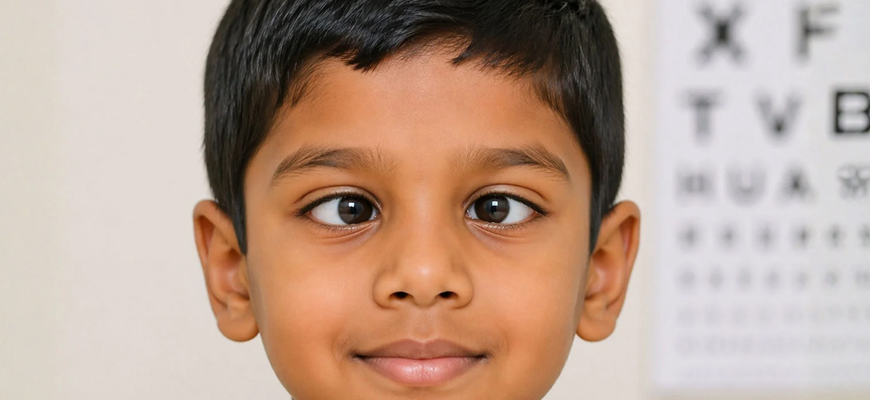
Pediatric Evaluation & Squint Surgery
Children's eye health requires specialized attention, as many vision problems can develop silently during the early years and significantly impact a child's learning and development. At FURIA'S EYE CLINIC, we provide comprehensive pediatric eye evaluations and expert treatment for squint (strabismus), lazy eye (amblyopia), and other childhood eye conditions.
Early detection and timely treatment are essential to prevent permanent vision loss in children.
Pediatric Eye Evaluation
A thorough eye examination in children includes assessment of visual acuity, refractive error, eye alignment, and overall eye health. Our team is experienced in examining children of all ages in a comfortable and friendly environment.
Common Childhood Eye Conditions We Treat
- Refractive errors — myopia, hyperopia, and astigmatism in children
- Amblyopia (Lazy Eye) — reduced vision in one eye due to abnormal visual development
- Squint (Strabismus) — misalignment of the eyes
- Blocked tear duct (Nasolacrimal duct obstruction)
- Congenital cataract and congenital glaucoma
- Retinopathy of Prematurity (ROP) in premature babies
What is Squint (Strabismus)?
Squint, or strabismus, is a condition in which the eyes are misaligned and do not look in the same direction simultaneously. One eye may turn inward, outward, upward, or downward. It can affect one or both eyes and may be constant or intermittent.
Signs of Squint in Children
- Eyes that appear crossed or do not align
- Head tilting or face turning to use one eye
- Covering or closing one eye in bright sunlight
- Complaining of double vision
- Difficulty with depth perception
Squint Treatment
Non-Surgical Treatment
- Spectacle correction to address refractive errors contributing to squint
- Patching therapy for amblyopia treatment
- Eye exercises (orthoptic exercises) for certain types of squint
Squint Surgery
When non-surgical treatments are insufficient, squint surgery is performed to correct the alignment of the eyes. The procedure involves adjusting the eye muscles to restore proper alignment and improve binocular vision. It is safe, effective, and performed under general or local anesthesia depending on the patient's age.
When Should Children Have an Eye Examination?
- At birth — for high-risk premature babies
- Between 6 months and 1 year
- At 3 years of age
- Before school entry and annually thereafter
- Immediately if any vision concern arises
Why Choose FURIA'S EYE CLINIC?
- Child-friendly environment and compassionate care
- Expert pediatric ophthalmologist with specialized training
- Comprehensive evaluation including cycloplegic refraction
- Experienced in squint surgery for all age groups
- Early intervention for best long-term visual outcomes
Facilities Available

FURIA'S EYE CLINIC
FURIA'S EYE CLINIC is dedicated to providing comprehensive, compassionate, and advanced eye care for patients of all ages. With a commitment to excellence, our experienced ophthalmologists combine clinical expertise with modern diagnostic technology to deliver accurate diagnoses and effective treatments for a wide range of eye conditions.
call now
+91 9969026600
+91 9372887736
Facilities Available
- Stitchless Cataract Surgery (Phacoemulsification) & Lens Implantation
- Lasik Surgery for Refractive Error (Glasses)
- OCT (High Definition Retinal & Optic Nerve Scan)
- Topography & Pachymetry for Corneal Evaluation
- Retinal Laser, Injection & Surgery
- Pediatric Evaluation & Squint Surgery
- Cosmetic Eye Surgery
- Glaucoma Care & Surgery
- Perimetry
- Yag Laser
Contact Details
copyright © 2026 Furias Eye Clinic. all right reserved.